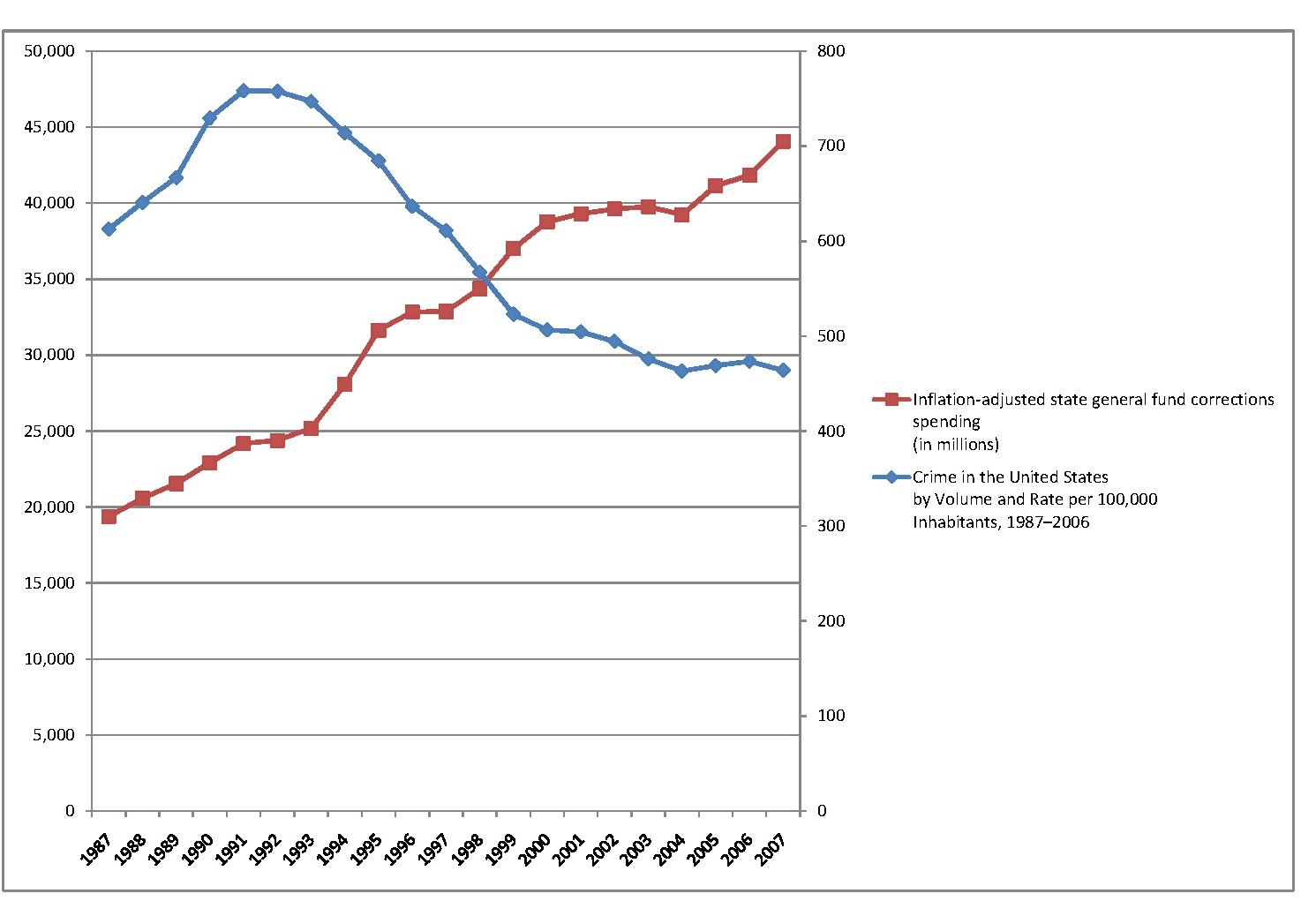
Great-Grandma Deserves Some Credit for Coming Up withThis:
My parents are visiting this weekend. My father tells me that my great-grandmother (his father's mother), a simple, uneducated woman who had a very hard life, used to say, in her native Yiddish, "If I ever get to meet God, I'll grab him by the neck and tear his beard out one hair at a time."
A Cal State East Bay math teacher and practicing Quaker who was fired for refusing to sign a state-required loyalty oath got her job back this week, with an apology from the university and a clarification that the oath does not require employees to take up arms in violation of their religious beliefs....
In a grievance hearing Thursday conducted in a telephone conference call, an attorney for the California State University chancellor's office presented Kearney-Brown with a statement saying in part, "Signing the oath does not carry with it any obligation or requirement that public employees bear arms or otherwise engage in violence."
With that statement stapled to the loyalty oath, and a promise by the university to present the clarifying language to other new employees, Kearney-Brown said Friday that she felt comfortable signing the form and returning to work.
New York Court Recognizes Canadian Same-Sex Marriage for Purposes of Divorce Action:
Beth R. v. Donna M., 2008 WL 615031, No. 350284/07 (a trial court decision from New York County):
Absent overriding legislation, recognition of out-of-state marriages is governed by common law doctrines and comity. New York courts have long held that out-of-state marriages, if valid where entered will be respected in New York even if under New York law the marriage would be void. "(I)t is a general rule of law that a contract entered into in another State or country, if valid according to the law of that place, is valid everywhere.... (T)he rule recognizes as valid a marriage considered valid in the place where celebrated." There are only two exceptions to this rule. New York will not recognize either a marriage prohibited by positive law of this state or a marriage abhorrent to New York public policy. The abhorrence exception is so narrow that it has been applied only to marriages involving polygamy or incest....
Courts have recognized other out-of-state marriages that are repugnant under New York law. Historically, New York law prohibited a respondent who was divorced on the grounds of adultery from remarrying during the former spouse's life. Yet the respondent's remarriage in another state was recognized as valid in New York if the other state did not preclude the remarriage of an adulterer. A valid out-of-state marriage that was voidable under New York law because a spouse was underage was recognized as valid in New York. Common law marriages, although not recognized in New York, will be upheld if validly entered into under the laws of another state. New York recognizes as valid out-of-state marriages by proxy, although such marriages cannot be performed within New York....
Accordingly, defendant's motion to dismiss this divorce action on the grounds that the parties' Canadian marriage is void under New York law is denied.
UPDATE: Thanks to commenter Klerk for a pointer to the decision, and also for a pointer to a similar decision last month in Martinez v. County of Monroe -- an appellate decision in that case, not just a trial court decision, and one involving a right to spousal health care benefits based on a Canadian same-sex marriage.
The makers of Airborne vitamin supplement have agreed to a $23.3 million class action settlement for false advertising. Though it's now marketed as nothing more than an immune booster, the manufacturer used to advertise Airborne could prevent or cure the common cold, despite the lack of any real clinical evidence for such claims. Airborne's makers did not make any concession of wrongdoing, though they will pay for ads telling consumers how to seek refunds. They've already launched a website with settlement details here.
The settlement may not end Airborne's legal difficulties, however, as the Federal Trade Commission and several state attorneys general are continuing to investigate the company's claims. For the time being, however, marketing experts apparently believe Airborne sales will remain strong.
Orac at Respectful Insolence, who first wrote about Airborne's claims two years ago, has more here.
More on Who Barack Obama Might Appoint to the Supreme Court:
From the March 3 New York Times:
Mr. Obama addressed the traits he would look for in a Supreme Court justice, suggesting he might leaven legal scholarship with practical political experience. He held up Earl Warren, a former governor of California and the former chief justice, as an exemplar. Mr. Warren, he said, had had the wisdom to recognize that segregation was wrong less because of precise sociological effects and more so because it was immoral and stigmatized blacks. “I want people on the bench who have enough empathy, enough feeling, for what ordinary people are going through,” Mr. Obama said.
Ed Whelan has more on Obama and judicial appointments in the Weekly Standard.
On Monday I criticized Senator John McCain for giving credence to claims that vaccines are linked to the rise in autism diagnoses. Some believers in such a link point to the case of Hannah Polling, recently settled by the federal government, as evidence in support of their claims. Specifically, the government agreed that Polling's parents were entitled to compensation from the federcal vaccine injury compensation fund because vaccines "aggravated an underlying mitochondrial disorder, which predisposed her to deficits in cellular energy metabolism, and manifested as a regressive encephalopathy with features of autism spectrum disorder." Today's NYTreports on the case:
Advocates say the settlement — reached last fall in a federal compensation court for people injured by vaccines, but disclosed only in recent days — is a long-overdue government recognition that vaccinations can cause autism. . . .
Government officials say they have made no such concession.
“Let me be very clear that the government has made absolutely no statement indicating that vaccines are a cause of autism,” Dr. Julie L. Gerberding, director of the Centers for Disease Control and Prevention, said Thursday. “That is a complete mischaracterization of the findings of the case and a complete mischaracterization of any of the science that we have at our disposal today.” . . .
There are two theories about what happened to Hannah, said her mother, Terry Poling. The first is that she had an underlying mitochondrial disorder that vaccinations aggravated. The second is that vaccinations caused this disorder.
“The government chose to believe the first theory,” Ms. Poling said, but added, “We don’t know that she had an underlying disorder.”
In a news conference on Thursday, Dr. Edwin Trevathan, director of the National Center for Birth Defects and Development Disabilities at the disease control agency, said, “I don’t think we have any science that would lead us to believe that mitochondrial disorders are caused by vaccines.”
UPDATE: Orac rounds up posts on the Polling case here.
Approximately two million American women belong to women-only health clubs. Some women, such as those with religious objections to wearing revealing clothes in front of men, and abuse survivors who find it traumatic to display their bodies in front of unfamiliar men, use these clubs by necessity. Other women join these clubs to avoid unwanted male attention while they exercise. Still others, including overweight women and women who have had mastectomies, feel much less self-conscious exercising in an all-female environment. The owner of one women’s health club boasts, "I like to think we're for real women. We don't have everyone looking like a Barbie doll. They're average size and shape. And we don’t let men in. We say, 'No men, no mirrors, no kids.'" The owner of a club that holds women-only aerobics classes explains, "It's a privacy issue. The women are sweating, they don’t have makeup on, and they feel that the guys are staring at their butts."
Some women find men to be a distraction when they go to coed gyms. Cynthia Parziale, director of research and development at the Naturally Women chain of fitness centers opines, "If you're really serious about your workout, it's distracting to have people of the opposite sex around. Women will spend time getting dressed or fixing their hair or putting on their lipstick before they come to the gym. The coolest thing about a women's gym is you can be ugly." Joan Pirone, who patronizes a women-only exercise club in Anchorage, Alaska, told CNN that "[a]t coed clubs you feel like you’re on TV, like the men are constantly looking at you. Some women enjoy the attention from men, but some of us are intimidated by it. I'm glad I have the choice of going to a women-only gym."
Other users of women’s health clubs find that the women-only facilities are cleaner and smell better than coed gyms. Women's clubs also often emphasize the workout equipment that is used more frequently by women, and many even have special equipment built for women. The two women-only clubs in Anchorage, for example, have smaller-than-average Nautilus machines designed for women's bodies, with the weight stacks increasing by three-pound increments instead of the usual ten. Women-only clubs also emphasize educational programs focusing on women’s health concerns, such as preventing osteoporosis and losing weight gained during pregnancy.
Despite their popularity and the privacy interests served by allowing women to work out free from male oglers, women-only clubs have sometimes run afoul of state laws banning sex discrimination in public accommodations. In 1988, noted feminist attorney Gloria Allred filed a sex discrimination lawsuit on behalf of a Los Angeles man who was denied admission to a women’s health club. Allred dismissed the concerns of women who join all-women gyms to avoid male ogling. She contended that the idea that all men ogle is a stereotype and that men who misbehave can be excluded from sex-integrated clubs on a case-by-case basis. Yet common experience suggests that heterosexual men are inclined to "check out" women, particularly women wearing small shorts or tight leotards. Further, Allred did not explain how a club would enforce or prevent an anti-ogling policy on an individual basis. It would be very different to actually prove the subtle act of a man evaluating a woman's body (Mr. Jones, please stop undressing Ms. Smith with your eyes), and sensitive women could very well feel ogled whether or not it was actually happening. Despite these
arguments, the Los Angeles club ultimately agreed to settle Allred's lawsuit and began admitting men. Successful lawsuits against women-only gyms in Minnesota, Orange County, California, and Wisconsin followed.
Happily, the tide seems to have turned against applying sex discrimination laws to the membership policies of gyms. In 1997, a Massachusetts trial court ruled that a women-only health club, Healthworks Fitness Center, could not exclude men. The decision was met with dismay by the 40,000 female members of that and other such clubs throughout Massachusetts. Despite the National Organization of Women’s objections, legislators responded to a flood of protests from angry female exercise enthusiasts by exempting single-sex health clubs from Massachusetts’s public accommodations law. Since then, Alaska, Colorado, Hawaii, Illinois, New Jersey, and Tennessee have also passed laws specifically permitting single-sex health clubs, catering to either sex.
The federal Equal Employment Opportunity Commission (EEOC), meanwhile, has sued women's health clubs for refusing to hire male employees. The most significant case involved the Women's Workout World chain of fitness clubs in the Chicago, Illinois metropolitan area. After a showing that the chain hired only women, a federal judge granted summary judgment to the EEOC's claim of employment discrimination. In response, Women's Workout World filed a motion for reconsideration supported by a petition signed by over 10,000 club members. In support of its motion, the chain noted that it specialized in individual attention for its members and that its members did not want men touching them during workouts or seeing them disrobed in the locker room.
The judge concluded that Women’s Workout World had articulated a legitimate privacy interest with regard to nudity and withdrew the summary judgment, but he allowed the case to continue. After seven years of crippling litigation expenses, Women’s Workout World settled. The company agreed to hire men for certain restructured positions that would (hopefully) maintain members' privacy, and to pay $30,000 to men who had been turned down for jobs. Other all-women clubs have also fought and sometimes lost sex discrimination lawsuits filed by men who were refused employment.
Duty to Save a Wrongly Convicted Person at High Cost?
Some reactions to my "a classical ethical bind for lawyers" post suggested that the ethical question was easy: The lawyers whose client had said he committed a murder should have revealed that information in order to free the person who was wrongly imprisoned for that murder, even assuming that would have meant disbarment or long-term suspension for violating lawyer-client confidentiality. If they didn't do this, they'd be acting unethically.
But even assuming that the underlying confidentiality rule is unsound, surely it's not so clear that people have an ethical duty to save another's life at such great expense. My guess is that if you spent $10,000, you could likely save the life of some sick child in Africa; if you spent $50,000, I imagine this would be even likelier (and perhaps the number is actually a lot less). If you donated a kidney — which will expose you to a roughly 0.03% risk of death, and a slightly larger but still very small risk of complications — you could dramatically reduce a roughly 20% or more risk of death for someone on the kidney waiting list (since that's how risky it is for him to be on long-term dialysis while he's waiting for a new kidney). If you find someone who's near the tail of the waiting list, you might reduce a still greater risk. Yet most of us wouldn't say, I think, that it's really your ethical obligation to run such a risk, or bear such a cost, to save a stranger's life.
Likewise, I don't think that it's really your ethical obligation to lose what is likely hundreds of thousands of dollars in future income, by giving up a profession that you spent over a hundred thousand dollars to train for. You might deserve credit for making such a choice (assuming we conclude that the ethical rule you're violating is indeed unsound). But that's different from saying that you have an ethical duty to make that choice.
Senators Clinton and Obama have sought to outdo each others' attacks on trade deals. While each may eschew the "protectionist" label, their campaign rhetoric could have consequences. As Rod Hunter warns, "If one of the Democrats wins the White House, he or she may find that the antitrade tirades delivered carelessly this year will, by next, have unleashed protectionist forces not easily controlled."
Senator John McCain's has a fairly free trade reputation, and is among the most pro-trade members of the Senate. This will enable to draw a stark contrast between himself and the Democratic nominee this fall, but trade lobbyist Robert Lighthizer thinks this would be a mistake. Writing in the NYT this week, Lighthizer argues McCain should embrace a pragmatic protectionism. According to Lighthizer, this is the true conservative position on trade, endorsed by many Republican political leaders over the past 150 years.
Daniel Drezner is not impressed with Lighthizer's policy argument, nor his revisionist history of trade policy (and that's putting it nicely). Megan McArdle concurs.
UPDATE: The Economistreports on the consequences of protectionist rhetoric.
FOR the United States' two immediate neighbours, the Democratic Party's primary campaign has been an unedifying spectacle. Barack Obama and Hillary Clinton have tried to outdo each other in blaming the woes of middle America on the North American Free-Trade Agreement (NAFTA) with Canada and Mexico. Both candidates have called for the agreement to be renegotiated, to insert tougher labour and environmental standards.
To politicians across the borders that looks irresponsible. Since it came into force in 1994, NAFTA has benefited all three economies, raising cross-border trade and investment. That applies especially to Mexico. Not by coincidence, since the signing of NAFTA Mexico has become a democracy and achieved economic stability. This has not halted the flow of migrants to the north. But their numbers would almost certainly have been greater without the agreement—or if its labour clauses were tougher.
Writing in today's WSJ, former Senator George McGovern decries the growth of paternalist government policies.
Under the guise of protecting us from ourselves, the right and the left are becoming ever more aggressive in regulating behavior. Much paternalist scrutiny has recently centered on personal economics, including calls to regulate subprime mortgages. . . .
Since leaving office I've written about public policy from a new perspective: outside looking in. I've come to realize that protecting freedom of choice in our everyday lives is essential to maintaining a healthy civil society.
Why do we think we are helping adult consumers by taking away their options? We don't take away cars because we don't like some people speeding. We allow state lotteries despite knowing some people are betting their grocery money. Everyone is exposed to economic risks of some kind. But we don't operate mindlessly in trying to smooth out every theoretical wrinkle in life.
The nature of freedom of choice is that some people will misuse their responsibility and hurt themselves in the process. We should do our best to educate them, but without diminishing choice for everyone else.
With the recent discussion about advice to aspiring federal law clerks, I thought I might drop my quick thoughts on what federal judges may be looking for when they hire clerks (having hired law clerks as a federal district court judge for the last five years).
Judges are basically hiring law clerks to do one thing: write. Judges assign law clerks to produce written orders and opinions and the like, so applicants would be well advised to show they chave the skills to carry out such assignments. Thus, the "writing sample" is one of the most important things in the application. A published law review note is one way to establish writing skills. But notes often have often undergone so much editing that they have an "institutional" feel to them and leave the reader wondering how much writing was done by the author and how much was done by the editorial staff. An unedited draft note or an unedited law firm memo may help put these concerns to one side.
Judges also looking for someone with good judgment. Law clerks are going to be the eyes and ears of the judge in reading briefs and researching cases. Someone who can spot the tough issue (or the easy issue, for that matter) is obviously much to be desired.
Judges are finally looking for someone who will fit in well for a year. A judicial chambers is a small operation, typically comprising the judge, one or two permanent staff, and a couple of clerks. Throw an abrasive person into that mix and you have a recipe for a bad year. Judges (no less than other employers) are very risk adverse and want to make sure that they are getting someone who won't be a monkey wrench in the machinery.
In light of all this, I don't think taking particular law school courses is valuable. Of course, an aspiring clerk should avoid taking a bunch of Mickey Mouse "Law & ...." courses, but instead should get courses of real substance. But beyond that, there is only one course I would recommend for aspiring federal clerks: Federal Jurisdiction. Federal jurisdiction is very complex and tough to pick up on the fly. This is the one course on a resume that usually caught my eye. (I suspect that for state Supreme Court Justices one class would be attractive: state constitutional law, an extremely important yet underappreciated subject.)
I would also strongly recommend getting to know one or two professors well. Because judges don't want to hire a dud (or, worse, a problem), they tend to rely on people they know well. For example, I tended to hire almost exclusively from my home state schools (Utah and BYU) or my alma mater (Stanford) because I knew the professors at these schools wouldn't let me down by recommending a problematic applicant. We were in a long-term relationship, which meant they would candidly tell me when someone who was good "on paper" was not going to fit in well.
Ideology was never a big factor for me. Perhaps it is different in the courts of appeals, but 99% of district court work just isn't political. As a result, I asked only one question along these lines: Would you have any problem working for a reputedly "conservative" judge? Invariably the answer was "no", and that was good enough for me.
Update: As a "take-home exercise" for aspiring law clerks, I have intentionally left several typographical and grammatical errors in this post so that they can practice their editting, er, editing skills and show that they are not risk adverse, er, averse to hard work. :)
Alton Logan doesn't understand why two lawyers with proof he didn't commit murder were legally prevented from helping him. They had their reasons: To save Logan, they would have had to break the cardinal rule of attorney-client privilege to reveal their own client had committed the crime. But Logan had 26 years in prison to try to understand why he was convicted for a crime he didn't commit....
Lawyers Jamie Kunz and Dale Coventry were public defenders when their client, Andrew Wilson, admitted to them he had shot-gunned a security guard to death in a 1982 robbery. When a tip led to Logan's arrest and he went to trial for the crime, the two lawyers were in a bind. They wanted to help Logan but legally couldn't....
The lawyers did get permission from Wilson, to reveal upon his death his confession to the murder Logan was convicted for. Wilson died late last year and Coventry and Kunz came forward. Next Monday, a judge will hear evidence in a motion to grant Logan a new trial.
I'm not a legal ethics expert, but my understanding is that there is indeed no exception from attorney-client confidentiality in such cases. (If a client tells you that he intends to commit a crime in the future, you may be able to turn him in, but not when he admits that he has committed a crime in the past.) And I can certainly understand the reasons for such a confidentiality rules, whether for lawyers, priests, or psychotherapists. But, boy, they surely do yield a very troubling result in a case such as this one.
I blogged yesterday about why I think women-only exercise hours at a Harvard pool don't violate Massachusetts law. I'm inclined to also think that they don't violate Title IX, because they don't deal with discrimination in educational activities. It's not clear whether an accompanying requirement that the attendants working at the pool during those hours be women would violate employment discrimination law; that turns on whether sex is a bona fide occupational qualification in that kind of situation, a matter that is not certain.
But I want to briefly touch on the broader policy questions: Should it be illegal for various organizations — whether health clubs generally or exercise facilities at universities — to provide single-sex exercise facilities? I'm inclined to say the answer is no.
1. To begin with, antidiscrimination law, especially as applied to nongovernmental entities, imposes substantial governmentally coerced burdens on liberty and choice, both of businesses (and similar nonbusiness entities) and of would-be patrons. In this kind of situation, the burden is chiefly on those people (men and women) who prefer single-sex exercise over mixed-sex exercise. That's a serious cost of any such law. This cost may be outweighed by various benefits, but we shouldn't forget the cost, nor just categorically assume that nondiscrimination based on various attributes must inherently be the rule everywhere.
2. In particular, I think the case for banning sex discrimination in places of public accommodation is fairly weak. Such discrimination rarely has major effects on people's lives, economic opportunities, educational options, and the like. Federal public accommodations law doesn't ban sex discrimination; state laws in Kentucky, South Carolina, and possibly Nevada (plus likely other places — I just took a quick look) don't, either. Whatever problems men or women may face in those states, I doubt that they stem from rampant discrimination in public accommodations based on sex.
In some situations, public accommodations discrimination based on sex may affect economic opportunities; this was a major argument for banning sex discrimination in clubs and social organizations that could be used for networking. I'm not sure that this is reason enough to ban such discrimination — people network over dinner with acquaintances, in church, and for that matter in bed, but that isn't reason enough to ban discrimination in socializing, religion, and sex. But even if one does think that some clubs should be required to open up to women as well as men, perhaps because government coercion in club socializing isn't as harmful to rights of association as government coercion in nonclub socializing (and because such coercion is needed to reduce economic barries to women), that should be the exception, not the rule.
Little harm is caused when, say, a hair stylist wants to serve only women (or only men), or a family lawyer wants to specialize in representing wives rather than husbands, or a bar offers a ladies' night discount to bring in more women (and thus indirectly help many of its male patrons). And a good deal of harm to individual choice is caused by banning such discrimination.
3. Yet even setting aside the general point in item 2, I think tolerating sex discrimination in health clubs and the like is especially appropriate. Exercise wear understandably tends to the relatively scanty or revealing (swimwear, for instance, can be revealing even when not scanty). It tends to show skin and figure, and it tends to show things that the wearer sees as flaws. Many women understandably don't like being viewed by male strangers is such situations, either because the women don't want to feel they are being lustfully ogled, or because they don't want to feel they are being harshly judged. The same may be true of some men who might prefer not to be viewed by female strangers (though I expect more on the "harshly judged" concern than the "lustfully ogled" one).
So I think there are eminently legitimate privacy-like concerns here — obviously not as strong as in the shower room or the locker room, but still pretty substantial. They may be especially felt by some Muslim women, but my guess is that many other women would have similar concerns, whether because of religion, nonreligious modesty concerns, vanity, or some mix.
Coercive governmental restrictions on single-sex exercise facilities are thus especially burdensome. And such restrictions strike me as providing especially low benefits. Even if women-only and men-only exercise facilities were allowed, I'm pretty sure that there'd still be plenty of places where women and men can exercise. (Even if the facts are otherwise, then at least some sorts of women-only and men-only times should be allowed.) Nor do I think that many women, for instance, would be professionally handicapped because they can't effectively network with men given that a few health clubs will become men-only (and I imagine they'd only be a few). It's thus quite right, I think, that some statutes (for instance, in Illinois, in some measure in Massachusetts, and I'd guess in many other states) and at least one court decision (in Pennsylvania) exempt health clubs from antidiscrimination law.
4. Finally, what about government funding? Should the law bar discrimination in places that are indirectly supported by government funds (as most universities are)? I don't think so: When the government consumes 25-30% of the GNP, and spends that money in a vast range of ways, I don't think a private institution's getting some government benefit — especially under an evenhanded program available to everyone — should generally affect the analysis.
All nonprofits, for instance, get a de facto subsidy through the tax deduction for charitable contributions. This means that religious institutions, including ones that provide benefits only for coreligionists, end up getting the economic equivalent of matching funds for the contributions they get. Should we be worried about that? I don't think so, especially when there's reason to think that the benefited programs in the aggregate serve a wide range of groups. Likewise, if some health clubs that get some indirect government benefits (e.g., because they are paid for by universities that get some government grant money) allow both sexes, some allow only men, some only women, and some women during certain hours and both sexes during other hours, that seems just fine to me.
5. So, the bottom line: Single-sex exercise should be tolerated, both by government, and (for some of the same reasons I mention above) by social norms. That's true whether people want it because they're Muslim, because they're from other religions that stress modesty, because they have nonreligious modesty concerns, or just because they think their bodies aren't yet good enough that they'd be comfortable having members of the opposite sex stare at them. The law shouldn't coercively interfere with people's ability to choose single-sex exercise programs, and with businesses' or organizations' ability to offer such choices.
A bunch of people have written in about In re Rachel L., a California Court of Appeal decision holding that there's no constitutional right to home-school your children. I read the case a couple of days ago, and checked out other caselaw on the subject. Here's what I've found:
1. It's pretty well-settled that the parental rights cases -- such as Pierce v. Society of Sisters (1925) -- don't secure a right to home-school. This is partly because Pierce seemed to expressly decline to raise such a right, saying, "No question is raised concerning the power of the state reasonably to regulate all schools, to inspect, supervise and examine them, their teachers and pupils; to require that all children of proper age attend some school, that teachers shall be of good moral character and patriotic disposition, that certain studies plainly essential to good citizenship must be taught, and that nothing be taught which is manifestly inimical to the public welfare."
Now perhaps this should just be taken literally to mean that the Court wasn't deciding this question. Or perhaps "require[ments] that all children of proper age attend some school" should -- as a constitutional matter -- be satisfied by a showing that the child is "attend[ing]" a home school that is allowing the child to perform at or beyond grade level. Or perhaps the means for regulating home schooling (such as tests that show a student's progress) are much more advanced now than they were then, and that regulated home schooling is a "less restrictive alternative" that would still accomplish the government interest in making sure children are adequately educated. But as best I can tell, all the appellate courts dealing with the subject have taken the view that bans on home schooling (or requirements that only people with suitable teaching credentials may home-school) are constitutional under Pierce. This has certainly been the constitutional rule recognized by California courts for 50 years; In re Rachel L. relies on a California appellate precedent from 1953.
2. Religious homeschooling is a different matter. Wisconsin v. Yoder held that the Amish could pull children out of school at age 14, and then vocationally train the children at home, notwithstanding a compulsory education law that generally required school attendance until 16. And Yoder survives the Court's decision in Employment Division v. Smith (which mostly holds that the Free Exercise Clause doesn't require religious exemptions from generally applicable laws, but which expressly preserves such claims in parental rights cases like Yoder). And in People v. DeJonge, 501 N.W.2d 127 (Mich. 1993), the Michigan Supreme Court generally held that there is a constitutional right to home-school, though with some regulations (not including a requirement that one parent be a certified teacher, which is the very requirement that the Michigan Supreme Court struck down).
The California Court of Appeal case concluded that the parents didn't introduce enough evidence that their motivation for home-schooling was religious, and it seemed more broadly hostile to this theory. Still, I think it would be possible for home-schooling parents in California who are home-schooling out of felt religious compulsion (or perhaps even felt religious motivation) to raise a Yoder claim, and perhaps to prevail on it.
3. I haven't done a precise head-count, but my sense is that home-schooling is legal in nearly all states -- but as a result of legislation, not constitutional litigation. It's quite possible that this case will trigger pro-home-schooling legislation in California.
4. As a policy matter, I think home-schooling -- with some regulation, for instance with mandatory testing of children to make sure they are learning well enough -- should indeed be legal.
5. As a constitutional matter, I'm not at all sure what the rule ought to be. On the one hand, I sympathize with parental rights claims, especially given the dangers of giving the government broad power to control children's upbringing, and given the American tradition of recognizing parental rights (though a tradition that has not been uniformly friendly to home-schooling).
But on the other hand, I think that whatever one thinks of the general unenumerated constitutional rights debates, a claimed right to control a third party -- however much the claimed rightsholder might generally love the third party, and however much that third party might need some control from someone -- strikes me as among the weakest sorts of claims for unenumerated rights. So I'm not confident about the right answer here; my post is primarily aimed at reporting on the controversy.
Harassment By "Reading ... Book Related to a Historically and Racially Abhorrent Subject":
The Indiana University-Purdue University Indianapolis letter David mentioned can't, I think, be captured well in a paraphrase. Here's the full text, sent to Keith Sampson (a janitor):
The Affirmative Action Office has completed its investigation of Ms. Nakea Vincent's allegation that you racially harassed her by repeatedly reading the book, Notre Dame vs. the Klan: How the Fighting Irish Defeated the Ku Klux Klan by Todd Tucker in the presence of Black employees. In conducting this investigation, we interviewed you, Nakea Vincent, and other employees with information relevant to the mailer.
Upon review of this matter, we conclude that your conduct constitutes racial harassment in that you demonstrated disdain and insensitivity to your co-workers who repeatedly requested that you refrain from reading the book which has such an inflammatory and offensive topic in their presence. You contend that you weren't aware of the offensive nature of the topic and were reading the book about the KKK to better understand discrimination. However you used extremely poor judgment by insisting on openly reading the book related to a historically and racially abhorrent subject in the presence of your Black co-workers. Furthermore, employing the legal "reasonable person standard," a majority of adults are aware of and understand how repugnant the KKK is to African Americans, their reactions to the Klan, and the reasonableness of the request that you not read the book in their presence.
During your meeting with Marguerite Watkins, Assistant Affirmative Action Officer you were instructed to stop reading the book in the immediate presence of your coworkers and when reading the book to sit apart from the immediate proximity of these co-workers. Please be advised, any future substantiated conduct of a similar nature could result in serious disciplinary action.
Racial harassment is very serious and can result in serious consequences for all involved. Please be advised that racial harassment and retaliation against any individual for having participated in the investigation of a complaint of this nature is a violation of University policy and will not be tolerated.
This concludes this matter with the Affirmative Action Office. If you have any
questions, please feel free to contact us.
If this were a parody, people would have faulted it for being so excessive as to be unbelievable — but it appears to be quite real.
Fortunately, the University seems to have changed its tune in a later letter:
This letter will replace my prior letter to you dated November 25, 2007.
I wish to clarify that my prior letter was not meant to imply that it is
impermissible for you or to limit your ability to read scholarly books or other such
literature during break limes. There is no University policy that prohibits reading
such materials on break time. As was previously stated, you are permitted to read
such materials during appropriate times.
I also wish to clarify that my prior letter to you was meant only to address conduct
on your part that raised concern on the part of your co-workers. It was the
perception of your co-workers that you were engaging in conduct for the purpose
of creating a hostile atmosphere of antagonism. Your perception was that you
were reading a scholarly work during break time, and should be permitted to do
so whether or not the subject matter is of concern to your coworkers.
I am unable to draw any final conclusion concerning what was intended by the
conduct. Of course, if the conduct was intended to cause disruption to the work
environment, such behavior would be subject to action by the University.
However, because I cannot draw any final conclusion in this instance, no such adverse disciplinary action has been or will be taken in connection with the
circumstances at hand.
Hard for me to see this as a "clarification"; it's a retreat, and an eminently justifiable one (though I wish it were even more complete and clear). In any case, though, the University deserves to be strongly faulted for its original position.
The New U.S. News Rankings Revealed!:
Over at Concurring Opinions, Daniel Solove has obtained a secret internal U.S. News memo on the new rankings for law schools. (Warning: Some readers may conclude that this post is "irresponsible" and "dangerous." Click at your own risk.)
Chicago May Criminalize Possession of Small Plastic Bags:
The Chicago Sun-Times reports:
Tiny plastic bags used to sell small quantities of heroin, crack cocaine, marijuana and other drugs would be banned in Chicago, under a crackdown advanced Tuesday by a City Council committee. Ald. Robert Fioretti (2nd) persuaded the Health Committee to ban possession of "self-sealing plastic bags under two inches in either height or width," after picking up 15 of the bags on a recent Sunday afternoon stroll through a West Side park. Lt. Kevin Navarro, commanding officer of the Chicago Police Department's Narcotics and Gang Unit, said the ordinance will be an "important tool" to go after grocery stores, health food stores and other businesses. The bags are used by the thousand to sell small quantities of drugs at $10 or $20 a bag. Navarro referred to the plastic bags as "Marketing 101 for the drug dealers." Many of them have symbols, allowing drug users to ask for "Superman" or "Blue Dolphin" instead of the drug itself, he said. Prior to the final vote, Ald. Walter Burnett (27th) expressed concern about arresting innocent people. He noted that extra buttons that come with suits, shirts and blouses -- and jewelry that's been repaired -- come in similar plastic bags. Burnett was reassured by language that states "one reasonably should know that such items will be or are being used" to package, transfer, deliver or store a controlled substance. Violators would be punished by a $1,500 fine.
Does anyone have the full text of the ordinance? If so, I'd appreciate it if you could post a link in the comment thread or send it to me via e-mail.
Harvard University has moved to make Muslim women more comfortable in the gym by instituting women-only access times six hours a week to accommodate religious customs that make it difficult for some students to work out in the presence of men.
Men have not been allowed to enter the Quadrangle Recreational Athletic Center during certain times since Jan. 28, after members of the Harvard Islamic Society and the Harvard Women's Center petitioned the university for a more comfortable environment for women....
Prof. John Banzhaf has put out a press release saying that it probably does:
... In 1998 a female weight lifter in Boston was awarded $5000 when she was denied admission to a male-only section of a gym which had a separate gym area for women. The Massachusetts Commission Against Discrimination made the ruling despite arguments that separate weight-lifting areas were necessary to prevent "sexual harassment," and a finding that it did in fact tend to reduce sexual harassment. [Hassan and DiCenso v. City of Boston, et al., 20 MDLR 83]
Just a year earlier Superior Court Judge Burnes ruled that a "women only" health club violates Massachusetts' public accommodation statute by refusing to admit men, and could not justify its policy on privacy grounds. [Foster v. Back Bay Spas, d/b/a/ Healthworks Fitness Center, Suffolk Superior Court No. 96-7060 (1997).]
Although the legislature responded by exempting some health clubs which are established solely for use by one gender, that exemption does not appear to apply here because the gym is used by both genders together during most times of the day, and because Harvard receives public funds. In the statutory words:
"however, that with regard to the prohibition on sex discrimination, this section shall not apply to a place of exercise for the exclusive use of persons of the same sex which is a bona fide fitness facility established for the sole purpose of promoting and maintaining physical and mental health through physical exercise and instruction, if such facility does not receive funds from a government source." [ALM GL ch. 272, § 92A] ...
A couple of quick thoughts:
I may be mistaken, but my sense is that the relevant statute wouldn't apply to Harvard if the exercise facilities are inded open only to Harvard students, faculty, staff, alumni, and some family members. The statute states that, "A place of public accommodation, resort or amusement within the meaning hereof shall be defined as and shall be deemed to include any place, whether licensed or unlicensed, which is open to and accepts or solicits the patronage of the general public" (emphasis added), and Harvard-only facilities aren't aimed at "the general public." Cf. Haskins v. President and Fellows of Harvard College, 13 Mass.L.Rptr. 691, 2001 WL 1470314 (Mass. Super. 2001) ("Although Harvard accepts applications for admittance from the general public, it admits only a small fraction of applicants. The unsuccessful majority (like the rest of the public) is then excluded. Thus Harvard is not a place of public accommodation within the meaning of the statute.").
If there's some statutory text or caselaw I may have missed on this, please let me know.
UPDATE: Thanks to Wallace Forman for the pointer to what seem to be the eligibility criteria for Harvard recreational facilities; the original version was more tentative on the criteria, and also omitted the possibility that family members might qualify (a possibility that does not affect the analysis, I think).
Supreme Court Trivia:
Name the Supreme Court Justice who made the following remark to counsel during oral argument: "Are you sure? I have smoked them, and I am sure I am not a dude."
Answer: Justice Oliver Wendell Holmes. This comment was made during oral argument in an antitrust case, in response to a lawyer's effort to establish that there was no foreign competition in the cigarette business by asserting to the Justices that "nobody but dudes and fools smoke foreign cigarettes." Source: Bander, ed., Justice Homes Ex Cathedra, at page 201.)
An employee of a public university was disciplined for engaging in "racial harassment" for reading a book called Notre Dame vs. the Klan: How the Fighting Irish Defeated the Ku Klux Klan. Apparently, the fact that the book had the phrase "Ku Klux Klan" in its title was enough to set the regulatory gears in motion. Paul Secunda has the details at Concurring Opinions.
While this book is actually a story of opposition to the Klan, I should note that in my view, even if the employee had reading a pro-Klan book it would be unconstitutional for him to face legal liability or punishment by the government merely because his choice of reading materials offended his coworkers.
"[We] Will Make Your Military Fantasies Become a Reality":
So says MilitaryLoveLinks.com. Of course, my first thought: I'll bet people can search by service; can't very well bring an Army boy home to meet the Marine dad. In any case, I can't say I've spent any serious time investigating this, but it sounds like a cool idea. I particularly like the Step 1 / 2 / 3 photos. (Seriously, they seem cute, as these things go.)
By the way, I spotted the site because of an ad on a blog (though I'm not sure which one).
Seen in an author's note: "I would like to thank Professor Orin Kerr of the George Washington University Law School for his posting on The Volokh Conspiracy that was the inspiration for this Note topic." Rasha Alzahabi, Should You Leave Your Laptop at Home When Traveling Abroad?: The Fourth Amendment and Border Searches of Laptop Computers, 41 Ind. L. Rev. 161 (2008).
The USDA's Rural Utilities Service (the successor to the Rural Electrification Administration) has decided to suspend new loans for coal fired power plants. While this may not make much of a dent in greenhouse gas emissions, it is a significant symbolic move. If the federal government is going to get serious about greenhouse gas emissions, it should reevaluate (if not eliminate) subsidies to carbon-intensive energy development, and this seems as good as any place to start.
The Federalist Society has posted a written debate on the Supreme Court's Stoneridge v. Scientific Atlanta decision. The participants are UCLA's Stephen Bainbridge, UDenver's Jay Brown, AEI's Ted Frank, Mayer Brown's Andrew Pincus, Andrea Seidt of the Ohio AG's office, and Robert Prentice of Texas. For those interested in Stoneridge and its implications for securities litigation, it is an interesting read.
Some commenters accuse my "Fake Memoirs" post of being "irresponsible" and "dangerous." Doesn't that make you want to check it out? Express your opinion in the comments; you can guess my view of the subject.
The Supreme Court announced yesterday that it will release audio of the oral argument in the Second Amendment case, D.C. v. Heller, on the day of the argument. This continues the Court's recent practice of releasing same-day audio in high profile cases. But this practice only begs the question: Why doesn't the Court release same-day audio in all cases.
Audio of the oral argument is very useful for those of us who wish to analyze pending cases, or share portions of arguments with our students. Any fear some justices may have that release of the audio would encourage grandstanding is undercut by the Court's release of audio in high-profile cases, as these are the cases in which the threat of grandstanding would seem to be greatest. In any event, I don't the audio tapes that have been released validate such fears. Rather, the tapes are a useful (and convenient) complement to and substitute for the written transcripts. I also think releasing same-day audio is in the Court's interest. The timely release of audio in all cases might dampen the pressure for televising Supreme Court arguments, a measure most justices seem to oppose. So let's hear it for hearing the oral arguments.
The troubles faced by the Cape Wind in Massachusetts do not seem to have deterred folks from proposing additional offshore wind projects along the Atlantic Coast. In addition to proposals for wind farms off of Delaware, there are three potential projects off of New Jersey. If a pilot project is successful -- and there are no undue delays -- there could be 100 wind turbines off of the Jersey shore within five years. Even with such developments, the U.S. would continue to lag behind other nations in use of wind power, however. There are already some two dozen offshore wind farms in Europe, and none in the U.S.
Judges as Public Figures:
The Chicago Faculty blog has posted this engaging and often hilarious free-ranging discussion with Richard Posner and David Lat. Topics include Underneath Their Robes, blogging about judges, Judge Posner's cat, and Judge Kozinski's considerable effort to win the UTR Superhottie contest. The panel was moderated by Lior Strahilevitz and was hosted by the University of Chicago Federalist Society.
1. Oklahoma City University School of Law Professor Michael O'Shea podcast on DC v. Heller. (Heller discussion starts about 3 1/2 minutes into the podcast.)
2. A 48-minute interview of Nelson Lund, in which I ask him about his Heller brief, and he explicates the grammar and vocabulary of the Second Amendment.
3. Jon Caldara, President of the Independence Institute, interviews me about candidates John McCain, Hillary Clinton, and Barack Obama, regarding their records on Second Amendment issues.
4. Lastly, the final version of my Quinnipiac Law Review article (co-authored with Paul Gallant & Joanne D. Eisen) is now available. The article details the human rights violations which have resulted from gun confiscation programs in Uganda, Kenya, and South Africa (ranging from ethnocide in Uganda, to sexual and ethnic discrimination in South Africa). The article also provides the most complete collection ever published of survey data about why people in various countries choose to own firearms.
Observations on oral argument in the California marriage case:
I've now listened to the oral argument in the California marriage case — all 3 hrs, 38 minutes of it -- and have a few impressions.
First, the most likely result is that the gay-marriage litigants will lose 4-3 or possibly 5-2. I defer to those more expert about that court, but based on the oral argument I would count Justices Baxter, Chin, Corrigan, and Werdegar as likely votes against the petitioners. These justices were much more hostile to the petitioners' arguments than to the state's. I would count Chief Justice George and Justice Kennard as likely votes for the petitioners. They were more hostile to the state's arguments and often intervened in helpful ways for the petitioners. I'm uncertain about Justice Moreno, though he seemed slightly more skeptical toward the petitioners.
This prediction assumes both that (1) the dominant tone and substance of the comments from an individual justice actually reflect his or her views about the case and that (2) the justice will not change his or her mind post-argument.
Even if the court doesn't order the immediate recognition of same-sex marriages in the state, however, the opinion it writes will matter for future litigation. It could issue an opinion in which it signals that it may revisit the issue if domestic partnerships do not, in practice, give substantive equality to same-sex couples. There is some evidence, noted in the oral argument today, that civil unions in New Jersey have fallen short in several ways.
Second, the state is defending a small sliver of territory in this case, which weakens the force of its arguments overall. California has already created domestic partnerships for gay couples that grant them all of the rights and benefits of marriage under state law. All that remains to do, under state law, is to call these relationships "marriages" instead of "domestic partnerships." That's ultimately what these six consolidated marriage cases are about.
The state cannot and does not justify the exclusion of gay couples from marriage based on things like promoting procreation and the best interests of children. AS a matter of state public policy, it has already surrendered much substantive ground about the differences between gay and straight couples. The state's counsel was left to argue that withholding the title of "marriage" is justified by the state's unadorned desire to "preserve the common and traditional definition of marriage."
Third, even the justices that seemed sympathetic to the state were skeptical about child-raising rationales, primarily because the public policy of the state is to make no distinction between same-sex and opposite-sex couples in child-rearing. Neither promoting procreation, nor its cousin, promoting responsible procreation, played a significant role. Procreation wasn't even mentioned until more than three hours had passed.
Fourth, the most impressive performance among the eight lawyers (yes, there were four on each side) came from Therese Stewart, representing San Francisco. She was sharp, articulate, succinct, incredibly knowledgeable, and calmly passionate. If same-sex marriage litigants are hobbled by weak constitutional arguments and now by the weight of much adverse precedent, they have repeatedly enjoyed an advantage in quality of advocacy.
By contrast, the main counsel for the state and the governor, both very fine lawyers, seemed unenthusiastic about their case. The governor's counsel began his presentation by asking whether the justices had any questions.
Fifth, there were a couple of mildly entertaining moments. Shannon Minter, for the petitioners, began his rebuttal by borrowing from Shakespeare: "Same-sex couples have come here today to praise marriage, not to bury it." That drew competing Shakespeare quotes from the justices along the lines of, "What's in a name?" and "A rose by any other name would smell as sweet." (Apparent references to the question of whether the name "marriage" makes any substantive legal difference.) Ok, I don't recommend a listen for the comedic quality of the arguments.
Finally, if gay-marriage litigants do lose the case, the loss may turn out to be a blessing in disguise for the gay-marriage movement as a whole. On the one hand, a pro-SSM ruling from the California high court would lead to a state-wide voter initiative to amend the state constitution to ban not only gay marriage but legislatively created civil unions as well. Nobody knows how that vote would turn out, but I would not be confident of a victory for gay marriage. That has always been a serious risk of this California litigation.
Beyond California, a ruling for the SSM litigants would increase the perceived risk to legislatures in other states that if they extend domestic partnerships or civil unions to gay couples courts will use that progress as a reason to force the states to go all the way to marriage. This might make them less likely to experiment with statuses that grants some rights and protections to gay families.
On the other hand, a ruling that leaves the issue to the state legislature (which has twice voted to recognize gay marriage) and the governor (who has twice vetoed gay-marriage legislation, deferring the issue to this litigation) will mean that this issue will be resolved democratically. Either this governor or a future one will eventually sign a gay-marriage bill which, as I understand California law, means that the voters of the state will have another go at the issue. (In 2000, they voted to define marriage as the union of a man and a woman in state statute.) In that event, the issue will be presented to them in the best possible light: with the state legislature and the state governor solidly behind the change — not simply the sympathy the state's high court.
Last May, after the D.C. Circuit Court of Appeals ruled in District of Columbia v. Heller that the D.C. handgun ban violates the Second Amendment, Harvard Law School Professor Larry Tribe was contacted, and asked if he would like to write an amicus brief in support of Heller. Tribe wrote back to Heller's attorneys that he did not want to do an amicus brief, but he would be interested in exploring his playing a "more central role" in the case. Tribe urged that he could be effective with the center and left-of-center Justices.
The only "more central role" than that of amicus-writer is that of co-counsel for Respondent. And, obviously, the only position of a counsel for Respondent would be in favor of affirmance of the favorable judgement below. Of course a counsel might offer a different theory for why the decision should be affirmed.
Today in the Wall Street Journal, Professor Tribe penned an op-ed urging that the decision of the Court of Appeals be reversed; he argued that the Second Amendment guarantees a real individual right (not militia-men while in militia service), but declared that a complete ban on handguns passes "any plausible standard of review."
Professor Tribe has the right to change his mind, but the air of forceful certainty with which he today argues for reversal seems inconsistent with his unrequited offer from ten months ago to play a "more central role" in securing affirmance.
Gary Gygax, co-creator of Dungeons and Dragons, passed away today. Others are more qualified than I am to discuss his immense technical contributions to the development of D&D and roleplaying games more generally. I will only note that an incredibly high percentage of the successful academics, scientists, and intellectuals from my generation were D&D players in their teens. I don't think that is a coincidence. Playing D&D also helped get me and many others interested in ancient and medieval history, which remains a major interest many years after I gave up the game itself. Gygax will certainly be missed.
UPDATE: To clear up some confusion among commenters, I don't necessarily mean to suggest that playing D&D actually causes success in academia or science. Two variables can be correlated in a noncoincidental way even if one does not cause the other. For example A and B can be highly correlated because both are in part caused by the same third variable C. In this case, playing D&D and later success in an intellectual profession were probably caused by an underlying propensity towards interest in intellectual issues (AKA - NERDINESS). Similarly, the competitiveness and attention to detail that you need to be a good D&D player also come in handy in academia, science and other intellectual fields. However, it's also possible that some causal link did exist. The experience of of playing D&D can also help stimulate other intellectual interests, as certainly happened in my case (though those particular interests didn't become the focus of my eventual career choice).
UPDATE #2: There is in fact evidence (albeit unscientific) suggesting that playing D&D does sometimes influence later career choices. Gary Gygax's wife told reporters today that "[o]ver the years, it was one of his great pleasures to meet fans who told him that fooling around with characters, persona and dice ultimately helped them decide to becoming [sic] a doctor, a lawyer, a policeman, or whatever else. 'He really enjoyed that.'" This didn't quite work in my case. My preferred D&D character classes were clerics and fighters, neither of which have much connection to my current career.
Obviously, Eugene and I’d disagree about the court and its make-up. I’m fine with that. Eugene’s an expert on the court, and I have complete respect for the way he sees things.
That said, I saw the key passage of my column as this one:
“It's about the assumptions that are now indelibly woven into the court's thinking, the whole approach the justices -- liberal or conservative -- seem to take to resolving cases. The more conservative court orthodoxies, with their emphasis on cabined textual interpretation, restriction of individual liberties to those enumerated in the Constitution, and skepticism of government interference in economic issues, is just about the only school of thought that matters at the high court anymore.
It shouldn't matter whether you agree with those tenets or not; the truth is that they shouldn't be the only assumptions with importance.”
So what I’m lamenting, I guess, is less about the justices in particular, and more an expression of my utter jealousy at the extent to which conservatives have woven their constitutional approach into the very fabric of the court. That is, of course, a result of Republican electoral dominance; that’s just the way that goes. But yes, I do think the court is worse off for the fact that many liberal schools of thought about the court and the Constitution are utterly locked out of the affairs on First Street. There is a whole generation of progressive, liberal thought about those issues that has just not been reflect on the high court. (think of Akhil Reed Amar’s wonderful take in his book about how the Bill of Rights was changed by the Civil War amendments, as just an example.)
The approaches of justices like Scalia, Thomas (yes, I know the difference between the two), Roberts and Alito is not matched on the opposite side. (Maybe you’d also argue that’s because there IS no match, anywhere, to the conservative approaches, but that’s another discussion.)
It was in that context that I wrote: “With more Democratic-appointed justices, I think we'd see more pushback against the conservative dominance. I think we'd see a whole category of more liberal legal thought get a stronger airing where it counts most.” I’m hoping to see some of the more disciplined liberal approaches join the discussion at the court.
Seriously, I wasn’t JUST talking about results.
I much appreciate Mr. Henderson's taking the time to respond, but I guess I'm still unpersuaded. It sounds like Mr. Henderson is criticizing the liberals and moderate liberals on the Court for not being eloquent, thoughtful, or liberal enough -- but if one looks at the concrete examples given in his column, it's hard to see the support for his case. Let me take them in order:
1. "Cabined textual interpretation" -- I'm pretty sure that the liberal and moderate liberal Justices on the Court are far from wedded to "conservative court orthodoxies" on the subject. (Perhaps even some of the conservative and moderate conservative Justices aren't always as into cabined textual interpretation as they should be.) Like all Justices, the liberals sometimes focus on the text and sometimes go quite far beyond it. It's hard to see, for instance, the liberals' view on abortion rights as a matter of "[c]abined textual interpretation." (Even if one thinks the Ninth Amendment or some other constitutional provision provides a textual hook for such enumerated rights, surely it takes more than "[c]abined textual interpretation" to get from the text to this particular right.)
2. "Restriction of individual liberties to those enumerated in the Constitution" -- the liberal and moderate liberal Justices form the majority of the support for Lawrence v. Texas and for continued protection for abortion rights, who expressed support for continuing unenumerated rights jurisprudence in Glucksberg. Many of them also support parental rights and substantive due process rights to limits on punitive damages (limits that, even if implicit in the Due Process Clause, are surely not expressly enumerated in the Constitution).
3. "Skepticism of government interference in economic issues" -- the liberal and moderate liberal Justices' votes in constitutional economic rights rights, like Kelo v. City of New London, don't exactly show skepticism of government interference. Likewise, while I haven't followed closely all the liberal and moderate liberal Justices' statutory decisions, I'm pretty sure that they don't stick with any "conservative court orthodox[y]" on the subject.
4. "[T]he scope of individual rights in the Constitution" -- surely here too the liberal and moderate liberal Justices' aren't sticking with conservative orthodoxies (though indeed in some situations all the Justices agree, or some conservative Justices join the liberal Justices, or some of the liberal Justices join the conservative).
5. "Race-consciousness of any sort -- even when designed to ameliorate past racial injustice -- is now routinely equated with racial discrimination" -- here, the liberal and moderate liberal Justices have been squarely opposed to the conservative position (though one of them, Justice Stevens, had joined the conservatives in the 1980s on some such decisions). Their views seem to well reflect the mainstream of "progressive, liberal thought" on the subject.
Now of course one could always find some scholarly views -- whether liberal, conservative, libertarian, or otherwise -- that are not being expressed by any Justice. Sometimes that's good and sometimes that's not. But as best I can tell, on every specific substantive issue that Mr. Henderson had raised, the liberals and moderate liberals on the Court have indeed often taken liberal positions, and articulated them well. Maybe there is "a whole generation of progressive, liberal thought about those issues that has just not been reflect on the high court," but nothing in the original column evidences that. There's plenty of liberal and conservative constitutional thought on the Court. The conservative dominance, such as it is, is precisely in the results (some of the time), not in the conservatives' supposedly having taken over the ideological debate, or having "woven their constitutional approach into the very fabric of the court" (at least to the exclusion of liberal constitutional approaches that are also woven into the same fabric).
As to the suggestion that the Bill of Rights has been changed by the Fourteenth Amendment, at least in its incorporation to the states, that's hard to evaluate as a global matter, and without reference to specific cases that might lead the Justices to consider adopting such a substantial departure from precedent. (The precedent as to most, though not all, Bill of Rights clauses is that they are incorporated against the states, and apply the same way to state law and federal law.) But I can say that, as to one provision of the Bill of Rights, one Justice has indeed argued that the Fourteenth Amendment shouldn't just apply the Bill of Rights to the states, and has even cited Akhil Amar on this score. That is, of course, Justice Thomas, writing about the Establishment Clause.
There are more than I'd thought, reports Slate. I'd read about the fake Holocaust memoir and the fake white-girl-in-South-Central-L.A. memoir, but Obama? Jenna Jameson? Persepolis? Shocking.
Like many of the commenters to Eugene's post, I agree that would-be federal court clerks should take civil procedure and basic criminal law and procedure. You will get a lot of cases in that area. Less obviously, I think it's very helpful to have taken legislation and antidiscrimination law.
Most federal law is statutory law. Moreover, the recent trend is towards enactment of statutes that are more complicated and detailed than those of the early New Deal-era regulatory state. A good legislation course can teach you a great deal about statutory interpretation that will help you deal with cases. In addition, if you become a litigator, it will be very handy for your later career in practice.
As for antidiscrimination law, Title VII employment discrimination cases are a large part of the docket in many circuits. Title VII cases are very different from constitutional Equal Protection Clause discrimination cases; it's much easier for the plaintiff to win under Title VII, especially in cases where's there is no direct proof of intentional discrimination by the defendant. So you should not assume that you have learned what you need to know about antidiscrimination law just from taking an intro constitutional law course.
Today the California Supreme Court heard oral argument in In re Marriage Cases, involving a challenge under the state constitution to the state's exclusion of same-sex couples from marriage. A video of the three-hour oral argument can be found here. The briefs in the cases, including the numerous amici, can be found here. A decision is expected within three months.
I have not yet had a chance to watch the oral argument, but I'd be interested in the impressions of those who have watched it.
UPDATE: I've closed comments so that the discussion can move to the new post on the subject.
A remarkable column from Stephen Henderson, the deputy editorial page editor of the Detroit Free Press, who used to cover the Supreme Court. A few gems:
"[T]he vacancies could be plentiful, particularly if a President Clinton or Obama serves two terms.... On the outside chance that the next president gets four or five appointments, we could be in store for a new core of young, liberal justices who will serve for a generation. That'll mean significant change in the august chambers of the court, where conservatives have, since Ronald Reagan's election in 1980, put as definitive a stamp on the high court as any in its history." But somehow, despite that,
No one's saying there should be a liberal dominance akin to what we've seen from conservatives over the last few decades. And the chances of that seem slim anyway.
But in the next four or eight years, we might see a return of something I think is fairly important in the law: balance. We would all benefit from more of that.
So a 5-4 conservative/moderative conservative Court is "dominance," but if several Justices retire and the Court switches to (say) 5-4 or 6-3 liberal/moderate liberal, that would just be "balance."
"The more conservative court orthodoxies, with their emphasis on cabined textual interpretation, restriction of individual liberties to those enumerated in the Constitution, and skepticism of government interference in economic issues, is just about the only school of thought that matters at the high court anymore." Got it — Lawrence v. Texas never happened; unenumerated abortion rights were overturned; likewise with other unenumerated rights (such as parental rights).
"It shouldn't matter whether you agree with those tenets or not; the truth is that they shouldn't be the only assumptions with importance." Of course it does matter whether one agrees with those tenets or not — if they are right, then they should prevail; if they are wrong, they shouldn't.
"With more Democratic-appointed justices, I think we'd see more pushback against the conservative dominance [among other things, on racial issues]. I think we'd see a whole category of more liberal legal thought get a stronger airing where it counts most." But of course the more liberal legal thought has gotten plenty of airing in dissents. By "stronger airing" the author must mean "victories." He's not looking for more debate or more balance, just more victories for his side; a perfectly plausible desire, but why deny it?
A Presidential election theory from Jeff Greenfield in Slate. My question, though: If Bugs Bunny always beats Daffy in the general, then didn't Daffy have to beat some candidates (including some Bugses) in the primary? Or is Daffy always the least Daffy of the primary lot (doesn't seem likely to me)?
When blogging my request for advice to soon-to-be law clerks, I forgot to mention this piece by my ex-boss, Judge Kozinski, and one of his ex-clerks, Fred Bernstein (whom I also know well): Clerkship Politics, from the Green Bag. I highly recommend it.
A 1995 Bureau of Labor Statistics survey reported the following preferences among surveytakers who identified themselves as one or the other (or as related term):
American Indian
49.76%
Alaska Native
3.51%
Native American
37.35%
Some Other Term
3.66%
No Preference
5.72%
So, again, even if you believe that members of various identity groups should generally be called by whatever term the group prefers -- a position that I've criticized -- there seemed to have been no overwhelmingly preferred term as of 1995, and I doubt that there is one now. (If you know of more recent surveys, please let me know.) And the older term, American Indian, is actually more popular than the term that I've often heard labeled as the modern preference, Native American.
Government Shutting Down Offshore Web Sites That Promote Tourism to Cuba?
A very troubling story; I don't have time to focus more on this right now, but I thought I'd pass it along to our readers. Thanks to How Appealing for the pointer.
Where should suspect terrorists be tried? In treaty-based international courts? Traditional Article III courts? Or, as my colleague Amos Guiora argues, in special domestic terror courts?
The on-line version of Penn Law Review (called cleverly PENNumbra) has this interesting on-line debate between Guiora from Utah and John Parry from Lewis and Clark.
Parry points to the fact that the federal courts have been able to try a few terror suspects, so he contends that Guiora's proposal is "a problem in search of a solution." [Oops, should have written "solution in search of a problem" -- thanks readers.] But we have really been able to try only a handful of the most high-profile suspects. Moreover, Parry concedes that not every suspect can be tried in federal court, leaving him to recommend "prolonged preventive detention" as the best fallback option. Between that and Guiora's proposal, it seems to me that Guiora's has a lot going for it.
Interview with Institute for Justice President Chip Mellor:
By coincidence, our discussion of the development of libertarian public interest law is happening at the same time as the publication of this interesting interview with Institute for Justice President and co-founder William "Chip" Mellor. IJ is, of course, the libertarian public interest firm that litigated Kelo v. City of New London, Norwood v. Horney, and other important property rights and economic liberties cases. Of relevance to our discussion is Chip's emphasis on the way in which IJ deliberately chooses cases that can make an impact outside the courtroom as well as within it (a point I noted in this post):
All of our cases are deliberately designed as platforms to educate the general public about the importance of what may seem to be unique or even arcane issues and why those issues affect many, many people beyond the particular case, both in terms of the situation and also in terms of the constitutional principle involved.
My main complaint about the interview is that Chip didn't get a chance to discuss the fact that he, like me, is a huge Red Sox fan. Clint Bolick, the other co-founder of IJ, is a Yankees fan. As a general rule, however, there may be some correlation between rooting for the Red Sox against the Evil Empire of the Bronx and support for libertarian legal causes.
CONFLICT OF INTEREST WATCH: As I have noted in the past, I have done a great deal of pro bono work for IJ over the years.
The response is a bit lengthy for a blog post, so I put it below the fold. But scholars and others interested in the history of the conservative and libertarian legal movement should find it of great interest:
Before getting into the substance of their comments on the book, I want to thank David Berstein, Ilya Somin, and Orin Kerr for their generous praise. Despite the fact that the book is about the law, and in large part about legal academia, the audience I had in my mind when I wrote it was my fellow political scientists. Scholars in my discipline rarely pay sufficient attention to the role of intellectuals, philanthropy and the professions as a cause of political change. In writing The Rise of the Conservative Legal Movement, I was primarily speaking to them. That two prominent academic lawyers like Bernstein, and Kerr found the book of interest is encouraging, especially given that they are likely to know my cases much better than my primary, disciplinary audience will. And the warm words of Ilya Somin, who is both a lawyer and a political scientist (Harvard-trained at that!), is especially gratifying.
Their complements aside, Somin and Bernstein had some particular issues with the book. In this post, I will deal with their most important criticism, which is with what is not between the pages, rather than with what is.
Where Are The Social Conservatives?
Both Bernstein and Somin are concerned that the book promises more than it delivers, in the sense that the title suggests to the reader that he is picking up a book on the “Conservative Legal Movement” but which spends most of its time with libertarians, and relatively little with social and religious conservatives. This is a reasonable point, and worth responding to at some length.
First, it was a concern that I was well aware of in writing the book, and that I struggled with more than a little bit. In fact, footnote #8 of the introduction explains why the book was generally light on religious and social conservatives. First, there is already an interesting book in print on the subject, Steven Brown’s Trumping Religion: The New Christian Right, The Free Speech Clause, and the Courts (Alabama, 2004). I strongly recommend that anyone interested in the strategic choices made by religious conservative lawyers study the book carefully, as I did: in my judgment, it was the best book published on conservatives in the law before mine, and certainly the best study of the subject since Lee Epstein’s Conservatives in Court (Tennesee, 1985). One of the main reasons I did not go into the subject at any greater length than I did was that I did not feel I had much to offer that Brown had not already covered.
Second, and related to the first point, is that while I believed I was already reasonably far up the learning curve on the subjects I covered in the book (despite not being a lawyer), I do not have any particular training or background in Christian conservatism. My method, such as it is, in studying these matters is to try to understand the challenges faced by organizational and intellectual entrepreneurs from the inside, to get into their heads and make sense of what the choices they were presented with looked like at the time they were facing them. To write a book like mine that covered Christian conservatives would require that the author have an intuitive sense of that part of the movement, and in all honesty, that is not part of my intellectual capital. I sincerely hope that someone who has that background will follow up on Brown’s book.
Third, I had some serious doubts that I could gain access to the sort of materials that form the backbone of my study, where Christian conservatives were concerned. It took years to get access to the internal files of the Federalist Society, CIR, IJ, and the law and economics programs, slowly leveraging the trust I got with one organization to get access to the files and honest recollections of the founders of others. While there are some links between the more libertarian-oriented groups I looked at and Christian conservatives, my judgment was that in building the trust and cooperation of the latter, I would be pretty well starting from scratch. As it was, this slow building of cooperation—and the simple difficulty of tracking down documents that were not kept in any public archive—meant that the book took far longer than I would have liked. My sense was that I might never have gotten that sort of access from Christian conservatives, and even if I did, it would have delayed the book considerably.
Fourth, there was a theoretical judgment behind (with some important exceptions) leaving social and religious conservatives for subsequent authors to grapple with. I spend the whole of Chapter Two reconstructing the emergence of what I call the “liberal legal network” in the legal profession and academy. The most important, and most direct, organizational and intellectual entrepreneurship designed to counter liberal entrenchment outside the courts was not the work of social and religious conservatives. This was especially the case where the legal academy was concerned—the earliest, and most effective attempts to build a non-liberal beachhead in the law schools were engaged in by practitioners of law and economics, who were disproportionately drawn from libertarian sympathizers. None of the founders of the Federalist Society was a religious conservative (they were all either Reaganite fusionists or libertarians), although they were all convinced of the need to create an organization open to them. Finally, there were important links between the people who participated in the law and economics movement and the Federalist Society (and especially those who funded them), and those involved in the secular parts of the conservative public interest law movement. That is, the organizations that I chose to study fit together into a kind of a whole, a network of interlocking organizations, intellectuals and funders, while Christian conservative lawyers (while having some connections to the groups I studied) had a fairly separate organizational history.
Finally, as Somin notes, I argue that the conservative legal movement experienced a kind of “endogenous libertarianism.” That is, the libertarian emphasis of the movement was driven in large part by the context in which opponents of the liberal legal network found themselves. The evidence for this can be found both in the secular and the religious parts of the movement. As Brown notes, most religious conservatives in the law would have preferred to focus their efforts on challenging the inherited understanding of the establishment clause, to permit a greater role for religion in the official conduct of public institutions. They were consistently rebuffed in this, primarily because the overwhelming weight of precedent as well as the dominant intellectual consensus sided with (civil) libertarians. They made a strategic calculation that it made more sense to adapt to the structure of the regime that they were opposed to, and thus shifted their energies to the free speech clause, where they could make basically libertarian arguments about state neutrality.
The same thing was true of the secular conservatives I discuss in the book, especially CIR [Center for Individual Rights]. Neither of the founders of CIR were full-throated libertarians, and in fact some of their earliest projects focused on enhancing the authority of state agents (like school principals and housing authorities) or limiting free speech (by putting teeth back in libel law). The “opportunity structure,” both in an intellectual and a precedential sense, in these cases was not forgiving, and thus CIR became a basically libertarian organization by following the path of least resistance, which involved turning many of the (civil) libertarian precedents they inherited against liberals (most notably in the case of academic free speech). In the case of CIR and religious conservatives, this “endogenous libertarianism” was also driven by the fact that it was libertarians in the legal academy who had done the most to prepare the ground for litigation, by persuading lawyers, judges and the broader intellectual community that alternatives to liberalism were not, to use Jack Balkin’s term, “off the wall.” So, in that sense, I focused more on libertarianism in studying the conservative legal movement because that was where the action was.
That all said, I do think that there is an important book yet to be written about social conservatives in the law. While Brown’s book is excellent, he did not get much if any access to the philanthropists of the movement, or to the internal papers of Christian conservative legal organizations. In addition, he focused mainly on public interest law firms, but not on student organizations like the Christian Legal Society or broader efforts to influence the legal intellectual debate. My sense is that, if a scholar with a strong intuitive sense of the movement was able to get access to the depth of materials on the Christian conservative legal movement that I received, there is at least enough material there for a book that will be interesting, and I imagine also surprising. I hope someone writes it—maybe a VC reader!
In October 2004, I reported that Columbia University was planning to start a new Israel Studies Department, in a rather transparent attempt to deflect criticism of its extremely anti-Israel Middle East Studies Department [home of the infamous Joseph Massad, for example], an attitude that had allegedly caused some of the faculty to behave unpleasantly to Israeli and Jewish students. I objected that if the criticisms of one-sidedness and discrimination were valid, this was not likely the best way to deal with it. Moreover, if this was an appropriate response, Columbia should have spent its own money on the new program, rather than ask the Jewish community to foot the seven-figure bill.
The New York Sun reports on the results of the search for a director of the new "Institute for Israel and Jewish Studies." First, the "Columbia search committee responsible for hiring a director included one of academia's most outspoken critics of Israel, Rashid Khalidi [last seen on this blog condemning Columbia president Lee Bollinger for his sharp introduction of Ahmedinajed; see also "What Planet is Columbia Professor Rashid Khalidi on], as well as a professor who supported an anti-Israel divestment campaign on campus, Lila Abu-Lughod." And the upshot? The new director is Yinon Cohen, who during Operation Defensive Shield, when the Israeli Defense Forces were in the West Bank successfully fighting those who had been blowing up buses and pizzerias, signed a letter expressing "our appreciation and support for those of our students and lecturers who refuse to serve as soldiers in the occupied territories."
And Martin Kramer has dug up a letter signed by Cohen in 2001, when the wave of Palestininan terrorism was just ramping up:
"We, faculty and students of Israeli universities, extend our arms in solidarity with your just cause, against repression of the popular uprising by the Israeli military forces.... Academic faculty in the occupied territories! We wish to cooperate with you in opposing the brutal policy of siege, closure and curfew of the IDF."
Dimitry Medvedev has just been elected President of Russia. Thomas Eagleton was, for a time, George McGovern's vice-presidential candidate. What attribute do they have in common, and that few others share? (And are there others who share the attribute? I don't know the answer to this last question.)
Thanks to my father for the observation that led to this puzzle.
Anything the clerks or ex-clerks (or judges) among our readers can recommend to soon-to-be judicial clerks (state trial, state appellate, federal trial, federal appellate, or specialty court)? Reading recommendations would be good, as would suggestions for courses to take. Thanks!
Court Dismisses Charges Against Principal "in the Interest of Justice":
New York law not just allows, but requires, courts to dismiss criminal complaints "in the interest of justice" if there is "some compelling factor, consideration or circumstance clearly demonstrating that conviction or prosecution of the defendant ... would constitute or result in injustice." (The law provides more general guidelines on this, which you can read for yourself.)
In People v. Federman, decided last week, the court did just that as to the high school principal who was arrested for a obstruction of justice. The police had arrested a student and were trying to take her out the front door. The principal asked that they take her out the back door, "to avoid removing the student through the front entrance in handcuffs while hundreds of students were waiting to enter school through that entrance." When the police refused, the principal apparently tried to block the front entrance, and was then arrested for resisting arrest himself.
The court concludes that because of the defendant's past accomplishments as principal, because the offense wasn't very serious, and because of the principal's laudable motivations ("attempt[ing] to spare the arrested student from embarrassment" and preventing "disruption with the orderly entry of students and the commencement of classes"), further prosecution would indeed result in injustice. An interesting result, under an interesting procedural rule.
Thanks to commenter stanneus for the pointer to the online version of the opinion.
Pro-life groups at a College of the Sequoias demonstration Monday were told by campus officials to limit the visibility of graphic posters or face removal from campus .... When organizers refused and contacted the college's legal advisers, the protest was allowed to continue without restriction. The anti-abortion demonstration will continue today in the college's free-speech area....
The protesters were told Friday and again Monday morning to turn their posters away from passersby, [Tulare-Kings Right to Life member Michael] Seaward said. Those wishing to view the material -— including images of discarded fetuses and images of genocide from around the globe -— would have had to step inside a fenced-off display area....
[College of the Sequoias President Bill] Scroggins said Monday administrators were trying to enforce a campus policy that regulates the time, place and manner of on-campus speech. There is not an attempt to censor content, he said. Scroggins said that over the years, [Dean of Student Services Don] Mast has received numerous complaints from students and staff members who found the anti-abortion groups' images offensive....
I'm sorry to hear about the college's initial attempt to restrict the speech -- a restriction that, from the press account, was indeed aimed at the supposedly offensive content of the speech, and thus couldn't be upheld as a constitutionally permissible content-neutral "time, place, and manner" restriction. But I'm glad that the college eventually backed down.
Two years ago, I noted that a survey of black Americans reported a tie between those who prefer "black" and those who prefer "African-American." I just ran across a Gallup survey (from last Summer) that reports a slightly more complex picture: The survey (again, of black Americans) asked,
Some people say the term "African-American" should be used instead of the word "black." Which term do you prefer -- "African-American" or "black," or does it not matter to you either way?
61% said it doesn't matter, 24% preferred African-American, and 13% preferred black. The maximum margin of error (at, I take it, the 95% confidence level) is reported to be 6%, but as I understand it the margins of error in such surveys are generally lower for the smaller percentages, so the 24%/13% difference is statistically significant at the 95% level (though you shouldn't take the precise magnitude of the difference to the bank).
My conclusion: Even if you believe that members of various identity groups should generally be called by whatever term the group prefers (I've criticized that position here, but let's assume it for the sake of argument), in this instance we see no clear preference. You might want to use "African-American" to maximize the appeal to black audiences, or for other reasons -- or you might want to use "black" for other reasons as well. But I don't think you can be faulted as a matter of good manners for using a label ("black") that three-quarters of the black American population finds to be either no less acceptable than "African-American" or actually better.
And, of course, you should recognize that while the two terms are roughly synonymous in the U.S., they are very different when you're considering the world at large: "Black" is a racial category, and "African-American" (in its common American meaning) is a subset of that category limited to those blacks who are also American. For an example of an error related to this unthinking substitution of "African-American" for "black," see this CNN transcript: "Hard to say because it's been 11 days since two African-American teenagers were killed, electrocuted during a police chase, which prompted all of this" -- "all of this" being rioting in France, which was triggered by the deaths of black teenagers who I'm pretty sure were not American tourists. (Thanks to Wikipedia for the pointer.)
As Orin points out in a recent post, one out of every hundred adults in now behind bars in country. The source for this factoid is the Pew Center on the States, which released its report "One in 100" to much fanfare.
The Pew Center claims that we are not really getting anything in return for the moneys spent on prisons. But curiously, despite the claim that this expenditure is "failing to have a clear impact either on recidivism or overall crime," the study never attempts to assess the impact on overall crime.
As a quick way of assessing the return is interesting to compare the moneys spent on prisons over the last twenty years(collected in the Pew report) and crime rates over the same period of time. This chart plots one against the other:
[click to enlarge]
As can be seen, significant increases in spending on prisons has coincided with significant reductions in crime. Of course, proving causality would require a more sophisticated analysis. But it would be remarkable to think that the prison growth has had nothing to do with the fact that violent crime rates have reached their lowest point in recent years, according to the Dept. of Justice Bureau of Justice Statistics.
To be clear about my own views, we should be smart about who we incarcerate. And of course we should explore alternatives to prison. But all too often factoids like the Pew Center's are used to urge bans on further prison construction without considering the very tangible harms to crime victims that such an approach would produce.
My colleague Stephen Bainbridge suggests "an interesting parlor game for lawyers":
How would the world be different if such and such case had been decided the other way? Create your own counterfactual in the comment section.
Keep in mind that you should consider the reaction of Congress and the public. For instance, if a hypothetical statutory decision -- contrary to the one that was actually rendered -- would have been promptly overturned by Congress, with little lasting political effect, then the world would not be materially different in that hypothetical.
Lightning Strikes Again:
Last week, I linked to a discussion among three Ninth Circuit judges in which one judge compared reversal by the Supreme Court to being "struck by lightning" and another claimed that the Ninth Circuit's high reversal rate was "largely a media myth." In light of that, I hope the media won't notice that lightning struck yet again today, this time in a 9-0 reversal of the Ninth Circuit in Boulware v. United States. Actually, I would guess the media won't notice this one: The Supreme Court ruled in favor of the criminal defendant, overruling Ninth Circuit caselaw going back to 1976 that had blocked the defendant from putting on a proper defense. (Indeed, the Ninth Circuit panel below can't be faulted for this — they were just following the 1976 precedent.)
Terrorist Organizations and Voluntary Human Shields
My colleague Amos Guiora has co-authored this interesting paper on "voluntary human shields". The paper tries to give some guidance to military commanders on what sorts of rules of engagement might be proper when operating in a world where a civilian might be friend, foe, or innocent bystander. It seems like this will be problem that our troops are going to increasingly confront.
At a town hall meeting Friday in Texas, Sen. John McCain, R-Ariz., declared that "there’s strong evidence" that thimerosal, a mercury-based preservative that was once in many childhood vaccines, is responsible for the increased diagnoses of autism in the U.S. -- a position in stark contrast with the view of the medical establishment.
McCain was responding to a question from the mother of a boy with autism, who asked about a recent story that the U.S. Court of Federal Claims and the National Vaccine Injury Compensation Program had issued a judgment in favor of an unnamed child whose family claimed regressive encephalopathy and symptoms of autism were caused by thimerosal. . . .
"We’ve been waiting for years for kind of a responsible answer to this question, and are hoping that you can help us out there," the woman said.
McCain said, per ABC News' Bret Hovell, that "It’s indisputable that (autism) is on the rise amongst children, the question is what’s causing it. And we go back and forth and there’s strong evidence that indicates that it’s got to do with a preservative in vaccines."
McCain said there’s "divided scientific opinion" on the matter, with "many on the other side that are credible scientists that are saying that’s not the cause of it."
The established medical community is not as divided as McCain made it sound, however. Overwhelmingly the "credible scientists," at least as the government and the medical establishment so ordain them, side against McCain's view.
Moreover, those scientists and organizations fear that powerful people lending credence to the thimerosal theory could dissuade parents from getting their children immunized -- which in their view would lead to a very real health crisis.
Tapper does a good job of exposing the scientific illiteracy of McCain's remarks. Here's more from Orac and Mark Kleiman. Orac also has background on the court case referenced in the story. And my co-blogger David Bernstein blogged on media coverage of thimerosal here.
La Jolla features an absolutely exquisite coastline. Featuring small beaches interspersed with rocks and outcroppings the area is often used as a backdrop for wedding pictures and other events. One relatively recent – and apparently controversial – attraction in the area is a beach known as the “children’s pool,” that has been taken over by a community of seals. For a decade or so, the marine mammals have congregated on the sheltered beach to bask in the sun, and give birth to their young. This past weekend I saw several newborn pups on the beach, acclimating to the outside world and learning to swim. This may all come to an end, however, as a consequence of recent litigation to force the seals’ eviction and restore the children’s pool area to human use.
The area in question is a small sheltered beach with a bathing pool that was created in
1931 by the construction of a concrete breakwater by Ellen Browning Scripps. The breakwater shields a small bathing area from the turbulent ocean surf. Intending to devote the pool to public use, Scripps donated the breakwater and pool to the city of San Diego, and the state legislature granted the adjacent state lands, including the submerged tide lands, to the city in trust, on the condition that the area “shall be devoted exclusively” to use as a public park, bathing, and recreational area – and so it was for several decades.
In 1993 the San Diego city council created a marine mammal reserve for local harbor seal population at “Seal Rock,” an outcropping approximately 100 yards from the pool, barring swimmers, divers, and tourists. The harbor seals apparently took to the reserve, to the detriment of the children’s pool. As the harbor seal population grew, so did the bacteria levels in the water due to seal feces. Eventually, city officials were forced to close the pool to swimmers due to the high bacteria count. Around this time, the harbor seals began using the children’s pool beach for hauling out of the water with greater frequency, apparently preferring the sheltered beach to the local preserve. This led local officials to erect barriers that would separate seals from onlookers and sunbathers, effectively closing the bulk of the small beach to public use.
In 1998 the city began investigating ways to reduce the bacterial contamination of the children’s pool so people could swim there again. Among other things this would require dredging the beach. The city wanted to facilitate human use, but was not eager to wholly evict the seals. Because the local seal population was thriving, the National Marine Fisheries Service saw no problem with eliminating the reserve or dredging the area. In NMFS’ view, however, the pool should be devoted either to use by humans or seals, disfavoring the city’s “shared-use” plan for health and environmental reasons.
Plans to dredge the pool stayed in something of a holding pattern for several years until 2004, when a local resident filed suit in state court, alleging that the failure to maintain the children’s pool for human use and recreation violated the terms of the trust. The trial court agreed, finding that the city had breached its fiduciary obligations, and was required to take all reasonable steps to dredge the pool and reduce the bacteria count to safe levels, even if this would mean displacing the seals. Last fall, the court’s judgment was upheld on appeal. (See O'Sullivan v. City of San Diego, ; 2007 WL 2570783 (Cal.App. 4 Dist.).
As I understand the current situation, the dredging may soon begin and the seals will have to find a new home. This is a shame, as I have enjoyed visiting the children’s pool and watching the seals on my occasional visits to La Jolla. Yet as a legal matter, it seems to me the state courts reached the correct result. So long as the pool is held in trust for human recreational use, including as a “bathing pool for children” and “playground,” the city would seem to have an obligation to maintain it as such. I suppose seal watching could be considered a public “use” of the beach – dozens of visitors use it as such on a daily basis – if only the trust document were not so specific. Were the seal population not thriving, federal law might also intercede. The Marine Mammal Protection Act could be used to prevent local action that would threaten the seals, but federal officials maintain the seals will do just fine with or without the use of this area as a rookery. The seals are alright, they will just need a new place to call home. So it seems I may have visited the seals of San Diego for the last time.
Sunday Song Lyric:
I spent the past several days at a conference in La Jolla. During breaks I would walk down to the water to watch the surf and the seals (more on them later). With my family at home, it made me think of Billie Holiday's "I Cover the Waterfront." Written by Edward Heyman (lyrics) and Johnny Green (music), it's one of her many great songs. Here's how it begins:
Away from the city that hurts and knocks,
I'm standing alone by the desolate docks
in the still and the chill of the night
I see the horizon the great unknown
my heart has an ache
it's as heavy as stone
with the dawn coming on, make it last
I cover the waterfront
I'm watching the sea
Will the one I love
Be coming back to me
I cover the waterfront
In search of my love
An I'm covered
By a starlit sky above
The full lyrics are here, and here is a Louis Armstrong version of the song.
I look forward to Ilya's next post on the rise of conservative public interest law. Meanwhile, I though I'd chime in with my own comment on Steve Teles's take on the Institute for Justice and the Center of Individual Rights.
First, let me acknowledge that I'm a huge fan of both organizations, and have friends who work at each of them. Nevertheless, having followed their progress from the beginning, I perceive of some weaknesses and missteps that Teles ignores.
To take one major example, when I was a visiting professor at the University of Michigan, I had Dean Evan Caminker guest lecture to my Constitutional Law class on the Grutter/Gratz affirmative action litigation. Among other things, Caminker provided a very persuasive analysis of why suing the University of Michigan, as opposed to other possible targets, was a strategic blunder by CIR. Not least, the University was able to spend virtually unlimited funds defending itself without asking the state legislature, which would not have been true for most state universities. A far more congenial target would have been a university that needed special funding from the leglisature to fight CIR, along with an unsympathetic legislature.
Teles, however, seems to have relied primarily on interviews with the principals in these organizations, along with the access he received to their internal documents. This certainly provided him with many interesting insights, but I think also meant that a certain objective outsider perspective is lacking.
The Times today has a story about Obama and the Jews. I have the following comments:
[UPDATE: I just caught the transcript of Obama's meeting with Jewish community leaders in Cleveland last week. Unfortunately, Obama lies pretty blatantly, to wit (referring to the award his church's magazine gave to Farrakhan): "An award was given to Farrakhan for his work on behalf of ex-offenders completely unrelated to his controversial statements." As I've noted before, the honor for Farrakhan was for his dedication to "truth," with no mention of ex-offenders. You can watch the magazine's video tribute to Farrakhan here, and decide for yourself if Obama is accurately represented the award. (After a clip of Farrakhan discussing his willingness to die for "truth," the narrator explains that Farrakhan is being honored for his commitment to "truth, education, and leadership.") The award is named after Rev. Jeremiah Wright, Obama's spiritual mentor who, as noted below, has also fulsomely praised Farrakhan's devotion to truth. [And this video calls Rev. Wright the magazine's "CEO" at the time of the award.] Back in mid-January, Obama, when asked about the award, said, "I assume that Trumpet Magazine made its own decision to honor Farrakhan based on his efforts to rehabilitate ex-offenders, but it is not a decision with which I agree." At the time, one could reasonably attribute Obama's statement to a false assumption that he and his aides hadn't the time to check up on. Now, with his aides having had a month and a half to discover the easily verifiable truth, I have to conclude he is simply being disingenuous. Obama thus avoided addressing the real concern, which is that his church's magazine and his spiritual mentor state that they honoring and praising Farrakhan precisely because of his stated political and racial views, which they claim are "honest" and reflect "truth." Note that as Andrew Sullivan has pointed out, this is not something that concerns only Jews.]
(1) The problems Obama is having with Democratic Jewish voters are exaggerated. Obama is doing about as well as one could expect while running against Hillary Clinton, a Senator from the state with the largest Jewish population in the country, and the wife of a former president who is extremely popular among Jews, and Jewish Democrats in particular. Much of the current handwringing over Jewish support from Obama comes from very liberal Jewish activists such as Josh Marshall and M.J. Rosenberg, who are infatuated with Obama, and can't understand why their fellow Jews aren't as well, given their belief that Obama, unlike Clinton, has the potential to lead the U.S. to a new era of Progressive liberal politics.
(2) The answer is that "Progressive" Jews tend to overestimate how liberal their ethnic cohort is. While Jews are much more liberal than the population as a whole, "self-described moderates and conservatives in the Jewish community outnumber self-described liberals by 57% to 42%", and those who identify themselves as "slightly liberal" outnumber "extremely liberal" 12% to 4%. And given that only about 15% of Jews are Republicans, even among Democrats and independents there are at least as many self-described moderates and conservatives as liberals. I'm sure that some of these "moderates" are actually reasonably liberal by mainstream standards, but when it comes to voting behavior self-description presumably often trumps detailed issues analysis, given voter ignorance.
(3) But why are many Jews suspicious of Obama? First, Jews (beyond the activist minority, which I suppose includes me) generally are inclined to prefer stability, as stable societies tend to be tolerant ones. And most Jews, like most Americans, never heard of Obama until recently, and many of his supporters seem to premise their support of him on the view that he will be destabilizing in some way ("change"). Not to mention that the last Democrat who came out of nowhere to become president promising change, Jimmy Carter, quickly became uniquely unpopular among Jews, failing to even get a majority of the Jewish vote in 1980.
(4) Second, Obama gives occasional signs of being a leftist. While leftist Jews are a vocal minority, leftists give even many mainstream liberal Jews a certain queasiness. In part, this is for the stability reasons suggested above. But it's also because left-wing hostility to Israel, suspicious to Jews as such, often crosses over into hostility to Jews. And it's not just a fringe phenomenon, as even respected leftist academics are occasionally known to say things about prominent Jews such as "Having a Likudnik as the number three man in the Pentagon is a nightmare for American national security, since [Douglas] Feith could never be trusted to put US interests over those of Ariel Sharon." For that matter, one can look at any comment thread on the Huffington Post when Dershowitz writes about Israel.
And even if Obama himself is a mainstream liberal, not a leftist, the fact that he has been receiving dispoportionate support (compared to Clinton) from the leftist contingent of the Democratic Pary raises suspicions that at best some of these people will get political power in an Obama admnistration, and at worst, "they know something we don't know." (The latter suspicion stoked by comments by a prominent Arab American activist who interacted often with Obama that Obama used to be very pro-Palestinian before he decided to run for president, and promises to be again.) It's entirely possible, and I think actually probable, that Obama is actually far more "conservative" personally than his longstanding political persona would suggest; I take it that one doesn't get elected to his former seat in the Illionis legislature if one is anything but a very liberal Democrat, and running to the clearly right of Clinton wouldn't have been a sound political strategy. But experience trumps speculation.
(5) It's no secret that according to polling data, anti-Semitism is much higher among African Americans than among the public as a whole, and that a parade of prominent African American politicians--Jesse Jackson, Al Sharpton, Cynthia McKinney--has been implicated in provoking or taking advantage of such sentiments. Perhaps nothing is as disturbing, or as mystifying, to Jews as the longstanding and continuing respect and admiration that Louis Farrakhan receives from prominent African Americans. It is, after all, undisputed that Farrakhan is an unrepentant bigot, whose Nation of Islam cult sells blatantly false, hateful tracts claiming a longstanding Jewish plot to suppress African Americans. When Obama decided on a spiritual mentor, he chose Rev. Jeremiah Wright, who has longstanding ties to Farrakhan (he took a trip to Libya with him in 1985, for example), and who recently praised praised Farrakhan for his "astounding and eyeopening" analysis of the "racial ills of this nation," a "perspective," he added, that is "helpful and honest." He chose to be a member of Wright's Afrocentric church, whose magazine recently honored Farrakhan for his purported dedication "truth, education, and leadership."
The Times article's author seems perplexed that "Obama's pastor" "has been viewed with suspicion." Quite obviously, it's not perplexing at all. Obama's ties to Rev. Wright raise some interesting questions. It's not that people think that Obama likes Farrakhan, or likely shares Wright's puerile anti-Israel views. The question is, why this church, and this pastor? The charitable view is that Obama was genuinely, religiously moved by his encounters with Wright and his congregation, and he found a spiritual home completely removed from politics. But Obama is a politician, and people tend to be somewhat suspicious of politicians. The cynical take is that the church and its 8,000 congregants served as an important political base for the previously irreligious Obama, and that he was willing to overlook Wright's more incendiary and dubious stances to secure that base. Now that Obama is running for president, he is conveniently distancing himself from some of this, but always in a manner that suggests he's still afraid of alienating people who find Wright's perspective congenial. Jews, not surprisingly, are inclined to support someone who stands up to anti-Semitism and its enablers (Rev. Wright) directly, and not just when it's politically convenient.
(6) All that said, Obama has been generally saying exactly the right things to soothe concerns among Jewish voters, including his MLK Day speech in which he denounced anti-Semitism in the black community, and his invocation at the recent debate of the historical civil rights ties between blacks and Jews. But if we keep in mind how popular the Clintons are among Jewish voters, that Bush received 25% of the vote against Kerry, and that McCain has a moderate reputation and has virtually no specifically Jewish-related blemishes, it's hardly surprising that Obama isn't being received with universal adulation in the Jewish community.
The Rise of Libertarian and Conservative Public Interest Law:
From the 1930s until the late 1970s, the field of public interest law was dominated by liberal groups such as the ACLU, the NAACP, the Lawyers Committee for Civil Rights, and the Sierra Club. Since then, libertarian and to a lesser extent conservative public interest firms have had a major resurgence. Organizations such as the Institute for Justice and the Center for Individual Rights have achieved some impressive legal and political victories. IJ's Supreme Court cases include Kelo v. City of New London and Granholm v. Heald (the interstate wine shipment case). CIR litigated Rosenberger v. University of Virginia, United States v. Morrison, and Grutter v. Bollinger.
Steven Teles' important new book, The Rise of the Conservative Legal Movement, does an excellent job of analyzing and explaining the growth of non-liberal public interest law. He notes that the success of libertarian and conservative public interest law groups was not foreordained. Indeed, early efforts in the 1970s and early 80s were mostly dismal failures. How did the founders of IJ and CIR turn things around? Teles notes two important causes: the second generation of libertarian public interest firms learned from the the strategies of their liberal predecessors and distanced themselves from business interests.
I. Learning from the Left.
Clint Bolick and William Mellor, the founders of IJ, deliberately copied the tactics of the NAACP Legal Defense Fund. Like the LDF, IJ seeks out sympathetic clients (often minority homeowners or entrepreneurial small businesses) for its economic liberties and property rights cases. This is part of IJ's more general strategy of fighting in the court of public opinion as much as in the courtroom. Even when IJ loses a case in court (as happened in Kelo), they often win in the long run by generating a political backlash and by undermining the previously existing elite consensus supporting status quo jurisprudence. The effort to seek sympathetic clients and influence public opinion was consciously copied from similar initiatives by the NAACP during the years leading up to its victory in Brown v. Board of Education. For example, in choosing clients for cases charging racial discrimination in criminal law, Thurgood Marshall would usually try to represent only those defendants who were likely to be innocent and therefore make a more favorable impression on white public opinion.
By contrast, Teles claims that the Center for Individual Rights pursues a more narrowly "legalistic" approach, seeking to make the strongest possible legal case, with relatively little attention to the attractiveness of the client or to public relations concerns. This strategy is similar to that of the ACLU in its early years. For example, CIR's clients in United States v. Morrison were rapists, a type of case IJ might have been reluctant to take.
Which strategy is better? Both have been successful and there is no need to make a categorical choice. IJ is surely right to emphasize the importance of public relations and sympathetic clients. CIR, however, correctly recognized that you can sometimes win important cases even with unattractive clients; sometimes, clients who won't look good in the press have the strongest legal cases. Overall, however, I think that IJ has been somewhat more successful. Although CIR has won as many or more important courtroom victories, IJ has been more effective in leveraging its courtroom victories (and even its defeats) into actual changes in the real world. For example, IJ's campaign against eminent domain has almost certainly had more effect in constraining the powers of goverment than CIR's effort to curtail government-sponsored affirmative action. IJ's strategy takes more account than CIR's of the reality that the impact of judicial decisions is often determined as much outside the courtroom as within it.
II. Independence from Business Interests.
Libertarian and conservative public interest law firms are often denounced as mere shills for business interests. Ironically, however, Teles shows that the success of these groups required them to reduce their ties to business. Early conservative public interest firms established in the 1970s often had close ties to business groups, such as state chambers of commerce, and were often funded by corporations. This created two serious problems. First, the press and public opinion could stigmatize the groups as the shills they to a certain extent were. Second, and even more important, business interests often conflict with the conservative and libertarian agenda of limiting government power and protecting free markets. Many businesses actively support government regulations that suppress their competitors or grant them special privileges and favors. Teles shows that early conservative public interest firms sometimes had to drop promising economic liberties cases because they conflicted with the self-interest of powerful business backers.
IJ, CIR and other "second generation" libertarian public interest firms learned from this mistake. Instead of depending on business groups for funding, they relied mostly on donations from ideologically motivated individuals and foundations, backers that mostly lacked a narrow self-interest in the litigation pursued by the public interest firms they backed. Today, much of IJ's litigation agenda in property rights and economic liberties is often opposed by powerful business interests. For example, as I argue in this paper, developers and other politically connected businesses benefit from the types of "economic development" and "blight" condemnations that IJ litigates against.
It is somewhat surprising that it took so long for right of center public interest lawyers to realize that business interests weren't necessarily their friends. As far back as Adam Smith, free market advocates have recognized that many business interests benefit from the expansion of government regulation and routinely lobby for special favors from the state. It was Smith, not Ralph Nader, who wrote that businessmen "never gathered together even for a social purpose save to conspire against the public interest." More recently, Milton Friedman, Mancur Olson, and especially the public choice economists have all emphasized the role of business interests in expanding the role of government whenever it was in their narrow self-interest to do so. Unfortunately, right of center public interest lawyers had to learn this lesson the hard way. This is one area where real world lawyers could have saved themselves a lot of trouble by reading the academic literature on business-government relations produced by denizens of the ivory tower.
Despite the important progress that has been made, Teles argues that the libertarian and conservative public interest law movement still has significant weaknesses. In an upcoming post, I'm going to focus on the most important of them: the lack of adequate "follow up" litigation to exploit major courtroom victories.
CONFLICT OF INTEREST WATCH: Over the years, I have done a considerable amount of pro bono work for IJ.